

A crisis counselor endures the horror of losing a caller to suicide, only to come home and find his fiancé in bed with another man. He walks out into the rain and disappears, emerging with no memory of his past but an instinct to heal, while the shattered fiancé hires a PI and vows to find him and earn back the ring on his finger. When a broken man who only knows how to save others collides with the one who destroyed him, the redemption won’t be gentle. And the heat will burn away every lie.

Breck
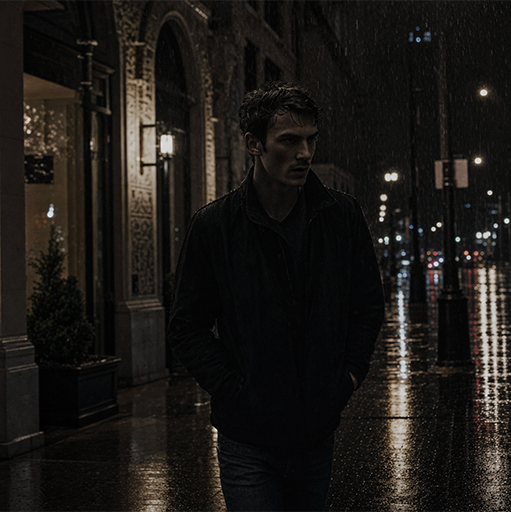
The rain found me somewhere around Division Street. Not a storm, just Chicago’s indecisive late-October needle spray, the kind that can’t commit to soaking you but leaves a chill that takes hours to shake. I’d walked past the umbrella stand again. The navy one Trace had set by the door that morning, the one he’d texted me about—Weather app says rain, bring it—was still exactly where he’d left it. I’d read the message. I’d thumbs upped it. I’d done the thing I always did, which was to assume I’d be fine and then spend the walk home with icy trickles working their way down the back of my collar.
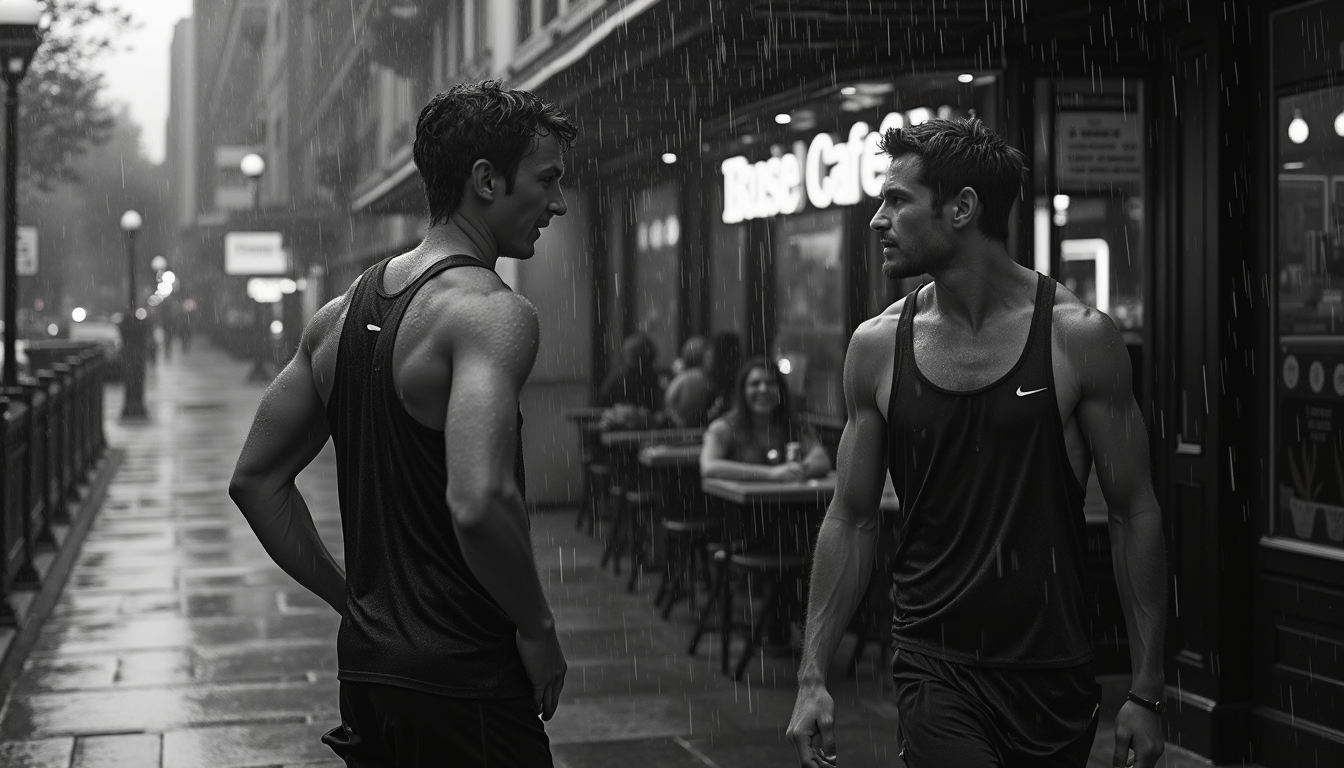
It was the caller before Marcus who was still on my mind. Gloria. She called every Tuesday at eleven-fifteen, had for three years, and I was the only person she’d speak to. Agoraphobia so calcified she hadn’t crossed her own threshold since before the pandemic. She didn’t want to die. She just needed someone on the other end of the line who’d notice if she stopped calling. Tonight she’d been good, genuinely good. She’d kept an orchid alive for eighteen months. A personal record. Her voice had done that thing where it relaxed without her noticing, the tightness bleeding out syllable by syllable, and I’d laughed with her. An easy, unforced laugh that made me feel, for a moment, like I was good at something that mattered. My supervisor had said as much in my last review. You’ve got a gift, Carson. People trust you.
I turned onto our street, hands burrowed in my jacket pockets, collar flipped up. Our block had the quiet that comes with money. Old-brick townhouses, gas street lanterns hissing softly in the damp, the sort of street Trace’s father called “tasteful” and my father called “a lot of house for two people.” We’d bought it together two years ago. Which is to say, Trace had bought it, and I’d contributed what I could, which was mostly moral support and a ferociously specific opinion about the kitchen backsplash. A handmade Moroccan tile in a shade of blue that reminded me of the Oregon coast. Trace had teased me about that backsplash for weeks. How I’d researched grout. How I’d made a spreadsheet. Then he’d installed exactly the one I wanted, the blue tile catching the under-cabinet light exactly the way I’d imagined, and when I ran my hand over it the day they finished he came up behind me and wrapped his arms around my waist and said, “See? I listen.”
He listened. That was the thing. His intense focus turned you into the only person in the world, as if your voice was a frequency he’d been tuned to since birth. And then he’d turn around and do something so casually cruel it took your breath away. I didn’t know that yet. Or maybe I did, in the part of my brain that logged the way he kissed my forehead when he felt guilty. A feather light benediction, lips barely brushing the skin, as if he could absolve himself with proximity.
Someone left the front door unlocked. Not unusual. Trace worked from home most days and he had a stubborn habit of forgetting to twist the deadbolt after his afternoon run. I pushed inside, dripping on the hardwood, and reached for the light switch. The scent of Trace’s leftover dinner filled the hall. Garlic, rosemary, something warm, and underneath it, faintly, his cologne, the cedar and bergamot one I’d given him for his birthday because the saleswoman had said it smelled like a forest after rain and I’d thought, yes, that’s Trace, that’s the scent of someone who knows how to be steady.
“Trace?” My voice came out strange. Hollow, like a word spoken into a jar. The syllables scraped on the way up. I hadn’t used it since the call ended. I’d been very quiet.
The house was dim but not dark. The kitchen light was on, spilling a long yellow stripe down the hallway, and somewhere upstairs music was playing. Something low and instrumental, the kind of thing Trace put on when he was trying to be seductive. I registered it without thinking about it. Later, I’d replay that moment a thousand times. The music was on. The music was on and you didn’t stop. You didn’t even slow down.
I didn’t know. I was twenty-eight years old and no one had ever cheated on me. The possibility wasn’t in my emotional vocabulary. Trace was my person, my safe place, the man who’d knelt in the rain on the Oregon coast six months ago and said he wanted the first moment of our forever to feel like coming home. Trace loved me. Trace would never.
“I had a bad one tonight,” I called, still loud enough to carry up the stairs. I was shrugging off my jacket, hanging it on the hook by the door because Trace hated when I left it on the banister. Force of habit. Love, as muscle memory. The jacket dripped onto the floor. I’d deal with that later. “Trace? One of my regulars. I couldn’t . . . I couldn’t talk him down. He . . .”
My voice broke apart. I stopped at the foot of the stairs, one hand on the banister, and the sound came back. The gunshot. That flat, percussive crack that had traveled through the phone line and into my ear and lodged itself somewhere behind my sternum. A splinter of noise I’d be picking at for the rest of my life. I’d been saying his name when it happened. His name was Marcus. He was twenty-three. He liked old jazz and bad puns, and once, during a call when he’d laughed at something I said, he’d called me “buddy” the same way my dad did. A small offhand word that means I see you and I thought maybe I was getting through. I’d thought we were building something, a rope bridge across the dark, and then the shot came and the bridge was gone and I was alone in my headset with the silence.
Upstairs, something moved. A thump. Then Trace’s voice, too low to make out words, but the tone was wrong. I knew his tones the way I knew the weather patterns of our apartment. The easy, amused one he used for work calls, the soft, sanded down one he used when I’d had a rough shift, the one he was using now . . . too loud, too casual, the voice of a man caught doing something he shouldn’t.
“Trace?” My hand tightened on the banister. The wood was cool and smooth, reassuringly solid. “Who’s up there?”
No answer. Then a second voice. Higher. Tense with confusion.
I climbed the stairs.
I’ve replayed this part so many times the memory has grooves in it. The give of the hallway carpet under my wet shoes. The bedroom door half open, light bleeding through the crack. Trace’s cologne thickened in the air as I got closer, mixing with something else. Something foreign. Sweat and a musk that wasn’t his and the faint, sweetish note of wine. The bottle he’d been saving, the one we were supposed to open on our wedding night.
I pushed the door.
The light from the hallway ripped a jaundiced yellow path across the bed. I saw Trace’s shoulder first. The left one, the one with the freckle just below the collarbone that I’d kissed a hundred times, traced with my thumb during movies, pressed my face into on nights when the calls had been bad and I needed to remember what skin felt like when it wasn’t trembling. And then I saw the other man. The arm across Trace’s back. The face turning toward me with lazy, dawning shock. A handsome face. Sharp jawed, dark haired, the kind that belonged on a gin advertisement. His waist was tangled in the sheets. The sheets I’d washed three days ago because Trace mentioned he liked the way the room freshened when they came out of the dryer.

He’s more handsome than me. That was my first thought. Absurd, devastating, the kind of petty, human thought the brain throws up when reality is too big to swallow. Trace’s type, I realized. I was Trace’s type, once. Softer around the edges now, maybe. Less polished. The sort of man who came home smelling like institutional hand soap and other people’s despair.
Someone made a sound. It might have been me.
Trace was moving, scrambling upright, the sheets pooling around his hips. His mouth shaped my name. Breck, Breck. But I couldn’t hear it. The gunshot had come back, louder now, a flatline ringing in my ears that drowned out everything else. The floor seemed to be tilting, as though the entire bedroom was listing to port. I put a hand on the door frame. The paint was cool and faintly sticky, the way old paint gets in humid weather.
“Breck.” Trace’s voice sliced through the ringing, sharp with panic. He was on his feet now, reaching for sweatpants, his hands shaking. I’d never seen Trace’s hands shake before. He was the steady one. The one who handled crises with the cool, removed efficiency of a man who’d been trained to manage other people’s money and other people’s fear. “Breck, look at me. Please. Whatever you’re thinking—”
“I had a caller kill himself tonight.”
The words came out flat. Dead. As if someone else was speaking through my mouth. I wasn’t looking at Trace anymore. I was looking at the stranger in our bed who was pulling the sheets up to his chest like modesty was the issue, like the catastrophe here were a breach of etiquette. I was looking at the nightstand, where a half-empty wineglass sat next to the bottle of Domaine Tempier Bandol Rosé Trace had been cellaring for our wedding. I was looking at our engagement photo in the silver frame on the dresser. Trace kissing my cheek, me laughing at something off camera, both of us squinting into sun. I’d been happy in that photo. Truthfully happy. I wondered if I ever would be again.
“Breck.” Trace was in front of me now, hands hovering near my shoulders but not touching. He understood he had forfeited the privilege. His face was pale in the jaundiced light, his hazel eyes wet and strange. I’d never seen him cry. Not really. A tear at a movie once, maybe. “I’m sorry. I’m so sorry. This isn’t . . . it’s not what—”
“His name was Marcus.” I was still staring at the photo. “He was twenty-three. He called me ‘buddy.’” I looked at Trace then and something in his expression cracked. “I heard him die. I heard the gun go off and I couldn’t save him and I came home because I needed . . . I needed you to . . .”
My voice splintered. A crack opened in my chest, the one I’d been holding closed with nothing but willpower and the promise of Trace’s arms. The promise that home was safe. That someone would catch me.
Trace reached for me. I stepped back. The motion was not a decision. It was a reflex, the body recoiling before the mind had a chance to weigh in.
“Don’t.” The word was quiet. Not angry. I was still in the place beyond anger, the place where nothing felt real. “Don’t touch me.”
“Breck, please. I made a mistake. A stupid, horrible mistake. It didn’t mean anything—”
“It means something to me.”
The man in the bed was saying something now, an awkward murmur about getting his clothes, giving us space. I didn’t look at him. I was unable to. If I looked at him I would have to acknowledge that he had rewritten the last four years of my life in the time it took to open a door. I wasn’t ready. I wasn’t ready for any of this. For a twisted moment I wondered if he had been worth it.
I turned and walked out of the bedroom.

Trace followed me down the stairs, still talking, still explaining, his words tumbling over each other in a way I’d never heard. Trace was always composed. Always measured, even in anger. Especially in anger. The man behind me now was a stranger, raw and desperate, and some distant, analytical part of my brain registered that this was probably the most honest he’d ever been. The thought made my stomach lurch.
“Breck, stop. Please. Just . . . just sit down. Let me explain. Let me—”
“Explain what?” I was in the kitchen now, though I didn’t remember walking there. My hands were doing something. Opening a cabinet, closing it. Muscle memory, searching for something I was unable to name. A mug. The kettle. The chamomile-valerian blend I made on bad nights. A ritual I’d built for Trace when he wasn’t able to sleep and then started using for myself. “Explain that you were screwing someone else in our bed on the night I needed you the most? Explain that you’ve probably done this before? Explain that our entire—”
“No. No, it wasn’t . . . that’s not . . .” Trace’s voice broke with an unfamiliar sound. “I love you. I love you, Breck. You know that. This was just . . . I got scared. The wedding, the commitment . . . I got scared and I did something stupid and selfish and I hate myself for it, but I love you. I love you more than I’ve ever loved anyone.”
“I’m pretty sure you were loving the guy upstairs less than ten minutes ago,” I turned around. Trace stood in the kitchen doorway, sweatpants on now, hair disheveled, face wrecked. He looked like a man who’d just watched his life implode in slow motion. Good, some vicious, unfamiliar part of me thought. Then I felt guilty for thinking it. Then I felt furious for feeling guilty. The emotional spiral was so swift and so nauseating that I gripped the edge of the counter as my knees gave way. The marble was chilly and solid. I focused on that. The temperature. The weight. The way the stone held its shape no matter what happened around it.
“You got scared.” My voice had gone calm again, the crisis-worker cadence creeping in. The one I used to talk people down from ledges, the one designed to slow a racing heart and still a panicked breath. “So you brought a stranger into our home. Into our bed. On a Tuesday night. Shared our wedding wine with him. While I was at work, saving lives, apparently not even knowing my own was falling apart.”
“I’m sorry.”
“You keep saying that.”
“Because I don’t know what else to say.” Trace took a step forward, stopped when I flinched. “Tell me what to do. Tell me how to fix this. I’ll do anything. Anything, Breck.”
I looked at him. At this man I’d loved for four years, whose hazel eyes I’d mapped like a coastline, whose hands I’d held through every hard moment of my adult life. The ring was still on his finger, platinum and simple, the one I’d put there six months ago on a rainy beach. I thought about Marcus. About the sound of the gunshot. About the silence afterward, the thirty seconds, forty-five, the full minute I’d sat there waiting for something that wasn’t going to come. I thought about Gloria, who’d called me “an angel” because I listened to her talk about orchids. I thought about my mother, who’d told me Trace was a decent man, a keeper, someone who’d take care of me.
I thought about how stupid I’d been. How trusting. How I’d never once checked Trace’s phone, never questioned a late night at the office, never wondered why he kissed my forehead when he felt guilty.
“Breck.” Trace’s voice was barely a whisper. “Please say something.”
I opened my mouth. Closed it. There were no words. The well I’d been drawing from all night? The steady, calm presence that talked strangers back from the edge. It was empty. I’d poured it all into Marcus, and Marcus was dead, and the one person who was supposed to refill me had emptied me out even further emptying himself in another man.
I walked past Trace. Back to the front door. My jacket was still dripping on the hook, a small puddle spreading on the hardwood.
“Where are you going?” Trace’s voice rose with panic. “Breck, it’s raining. It’s the middle of the night. You can’t just—”
“I need air.”
“I’ll come with you.”
“No.” I opened the door. The rain was harder now, a steady, percussive rhythm that matched the pounding inside my skull. The air hit my face, bitter and clean and utterly impersonal. Wet asphalt and fallen leaves and something else struck me. The faint, electric tang of a city that didn’t know or care what had just happened inside this house.
“Breck, please. You’re scaring me. Just stay. We can talk about this. We can . . .”
I stepped outside. The rain found me immediately, needling through my shirt, and I took a breath that felt like the first one in hours. The wedding invitations were on the hall table. I’d seen them on the way out. The ones we’d addressed together last weekend, sitting on the living room floor with takeout containers and a bottle of wine. I’d done my half in careful, rounded handwriting. The kind I’d taught myself for the crisis line paperwork, every letter legible so no one would ever feel unseen. Trace had teased me about being slow. He’d thrown a mushroom at my head. We’d been laughing.
“I love you,” Trace said from the doorway, his voice raw and broken. “I know you don’t believe me right now. I know I’ve given you no reason to. But I love you, and I’m going to fix this. I’m going to be better. I swear to God, Breck, I’m going to be the man you deserve.”
I didn’t turn around. If I turned around, I might believe him. If I believed him, I might forgive him. And if I forgave him, I wouldn’t know who I was anymore.
I started walking.
The rain swallowed the sound of his voice. The street was empty, wet asphalt gleaming under the amber streetlights. I walked past our neighbors’ houses, their windows lit and warm, their lives intact. I walked past the park where Trace and I used to jog on Sunday mornings, the path where he’d once stopped mid-stride to point out a heron standing motionless in the pond, its reflection perfect and still. I walked past the coffee shop where we’d had our first non-fundraiser date, the one where he’d made me laugh so hard I’d snorted chai latte out my nose and he’d handed me his handkerchief. An actual linen handkerchief, because he was that kind of person and he’d said, “I’m going to marry you someday.”
I walked and I didn’t stop.
At some point, the houses started looking unfamiliar. The street signs changed. The neat brick gave way to concrete and chain-link, to buildings with darkened windows and faded advertisements for products that no longer existed. I didn’t recognize any of it. The not knowing felt like relief, like slipping out of a heavy coat you hadn’t realized was crushing you. Like the moment just before sleep, when the edges of yourself start to blur and the thing you were worried about no longer has a name.
The rain kept falling and I kept walking. Somewhere between one step and the next, Breck Carson slipped away. A body moved forward through the wet, a man-shaped absence, carrying nothing but the sound of rain, the echo of a gunshot he couldn’t name, and a ring on his finger he kept touching as if it might tell him who he was.
He walked. And walked. And walked.
And the city swallowed him whole.

Trace
I let him go.
I stood in the doorway of the house we’d bought together. The house I’d bought, if we’re being honest, because Breck couldn’t afford this neighborhood on a crisis counselor’s salary and I’d wanted him to have nice things, wanted to give him the world, wanted to prove I could take care of him even when I couldn’t take care of his heart. And I had watched him walk into the rain. He hunched his shoulders. He was wearing the gray sweater I’d bought him for Christmas, the one he said was “too nice for work” and then wore anyway because it made him feel loved. Rain had already plastered his hair to his skull. He didn’t look back.
The wedding invitations were on the hall table. I could see them from where I stood, a neat stack of cream envelopes, our names on the return address in Breck’s careful, rounded handwriting. He’d spent an hour on the layout, tracing each letter as if the legibility of his script could guarantee the stability of our future. I’d teased him about it. I’d said, “You write like a hostage negotiator.” He’d said, “I am.” And then he’d thrown a mushroom back at my head.
The invitations were still there. Breck was not.
“Trace.” Rob’s voice came from the stairs. He had thankfully put on jeans and a hoodie, slinging his gym bag over one shoulder. His face did that careful, masking discomfort thing people do when they’ve accidentally wandered into a domestic catastrophe. “I’m gonna go. I think that’s best.”
I didn’t turn around. The rain was still falling, silver needles in the streetlight. “Yeah.”
“I didn’t know. About the engagement. You said you were single, and I—”
“Yeah.”
“I’m sorry. For what it’s worth.”
I turned then. Rob was exactly what I’d wanted him to be when I’d brought him home three hours ago. Handsome, uncomplicated, easily discarded. A transaction. A reminder I could still have my pick if I decided Breck wasn’t enough. He was looking at me with a mixture of pity and wariness, the way you look at a stranger who’s just had a very public breakdown.
“It’s worth nothing,” I said. The words came out flat and cruel and I didn’t bother to soften them. “But thanks.”
Rob flinched. Good. I’d spent my whole life being charming. Being the guy who could smooth over any awkwardness with a well timed joke and a generous pour of expensive scotch. I didn’t have the energy for it anymore. The mask had slipped. Underneath there was just a man who’d destroyed the best thing in his life because he was too much of a coward to face his own fear.
Rob left. The door clicked shut. I stood in the hallway in my sweatpants, barefoot, and stared at the place where Breck had been standing thirty seconds ago.
His jacket was still on the hook. I’d nagged him for two years to use the hook, not the banister. He’d always forgotten. Tonight, the one night I’d needed him to forget, he’d remembered. The universe, as it turns out, has a sick sense of humor. The jacket was dripping onto the hardwood. I should get a towel. I didn’t move.
I walked into the kitchen. The espresso machine was still on, the green light glowing, because Breck always forgot to turn it off after his pre-shift coffee. His mug was on the counter, the chipped one with the Brightline crisis line logo, the one he used every morning for the oat milk latte I made him before work. It was still half full. The milk had separated into pale swirls floating in the bleak coffee like slow motion smoke. I picked up the mug. It was warm at the bottom where the heating element had been and cold at the rim where his lips had touched it. I held it. I put it down again.
I touched my jaw. A nervous habit I’d never been able to shake. I was lying to myself even now, and my body knew it.
The house was so quiet I could hear the refrigerator humming. The wedding invitations sat on the hall table, their edges crisp and unsent. The rain kept up its steady percussion on the windows. The house we’d filled with art and books and Breck’s grandmother’s quilt, a home I’d paid for and he’d made, struck me as a mausoleum now.
I should call someone. That was the logical next step. Breck’s mother, perhaps. Elaine, who’d already started planning the wedding flowers, who sent me handwritten thank you notes for “taking care of my boy.”
Hello, Elaine. It’s Trace. Your son just walked out into a rainstorm because he caught me with another man, and also someone died on his shift tonight, and I’m not sure he’s okay. Just thought you should know.
I couldn’t make that call. Not yet. Not until I’d found a way to frame it that didn’t make me the villain, and the thing was, I was the villain. There was no framing that changed that math.
I poured myself a whiskey. The thirty-year Macallan my father had given me as an engagement present, the one I’d been saving for . . . what? A moment that deserved thirty-year scotch. This was not the moment. I drank it anyway, standing at the kitchen counter in my bare feet, the chill from the floor seeping up through the soles. It was peat and regret on my tongue.
My phone buzzed. Breck’s name on the screen. My heart slammed against my ribs. He was calling. He was coming back, I could fix this . . . .
No. A text. From two hours ago. The one I’d ignored because I’d been busy with Rob, because I’d silenced my phone and let it buzz itself to sleep on the nightstand while I did the thing that would end my life as I knew it.
Rough shift. Need you tonight. Coming home early. Love you.
I read it three times. The words didn’t change. The timestamp didn’t change. Two hours ago Breck had needed me and I had been in our bed, eight inches deep in a man whose last name I never asked. I set the phone down very carefully, walked to the bathroom, and threw up the thirty-year Macallan. The bathroom tiles were cold under my knees and the floor smelled faintly of the eucalyptus cleaner Breck used because he said it cleared his head after a rough shift. I stayed there a long time, pressing my forehead to the porcelain, while the rain kept falling outside and the house kept its terrible silence.

I didn’t sleep.
I sat on the living room floor with my back against the couch, Breck’s grandmother’s quilt bunched beside me, and waited for the front door to open. He just needed air. He’d said so. He’d walk around the block, cool down, and come home. He always came home. He was Breck. Steady, reliable, the person who showed up even when it hurt. Especially when it hurt.
At two in the morning, I called his phone. It went to voicemail. His voice was warm and slightly self-deprecating, the way he always sounded on the recording, as if he was a little embarrassed to be asking for your attention. Hey, you’ve reached Breck Carson. I can’t come to the phone right now, but leave a message and I’ll get back to you as soon as I can. Take care of yourself, okay?
The beep.
“Breck. It’s me.” My voice came out rough, scraped raw from the vomiting. “I know you’re angry. You have every right to be angry. Just . . . please call me. Please let me know you’re safe. I’m going to fix this. I don’t know how, but I’m going to fix this. I love you.”
I hung up. Called again. Voicemail.
At three in the morning, I called his sister. Avery picked up on the third ring. Her voice was groggy and then instantly sharp with the instinctive clarity that sets in when a phone rings in the middle of the night and you know, before you even answer, that something is wrong.
“Trace? What’s going on?”
“Avery.” My voice cracked. I’d meant to sound calm, in control, the Trace everyone expected me to be. Instead I sounded like a man who’d been crying for three hours. Which, I realized, I had been. “There was a fight. Breck and I. He . . . he left. He went for a walk and he hasn’t come back. It’s been hours.”
“What kind of fight?” Avery’s voice sharpened further. She’d never quite liked me and I’d always resented that . . . Breck’s cynical younger sister, who saw through charm like it was cellophane. Now I understood it. She’d been right all along.
“A bad one. My fault. Entirely my fault.”
“What did you do, Trace?”
I closed my eyes. The backs of my eyelids were dark and pulsing. “I cheated on him. He came home early from work. He had a terrible shift. Someone died, a caller. He needed me and I was in bed with someone else.”
The silence on the other end was absolute. Static hiss filled the line, the faint background hum of whatever apartment she was in. Then Avery said, very quietly, “You piece of shit.”
“I know.”
“He needed you. He had a caller die. I didn’t even know that was possible. I thought crisis lines were just talking, and he came home to you and you were . . .” She stopped. I heard her take a breath, the breath you take before you say something you can’t take back. “If something happens to my brother, I will never forgive you. Do you understand me? Never.”
“I understand.”
“Where would he go? Think. You know him better than anyone. Where would Breck go when he’s hurting?”
I thought. That was the problem. Breck didn’t go anywhere when he was hurting. Breck was the one who stayed. Who absorbed. Who held other people’s pain until they were steady enough to walk away. In four years, I’d never seen him fall apart. I’d never had to catch him. I’d never offered.
“I don’t know,” I said. A terrible admission. “I don’t think he has a place. He’s always been the place for everyone else.”
Avery made a sound that might have been a laugh or a sob. “Yeah. That’s him. That’s my brother.” Another pause. “I’m calling the hospitals. You call the police.”
“The police won’t do anything for twenty-four hours.”
“Then call them anyway. Do something useful for once in your life.”
She hung up. I sat in the dark, the phone pressed to my forehead, and tried to remember how to breathe. The rain had stopped. I hadn’t noticed when. The silence left behind was worse.

The police came at six in the morning. Two officers, a man and a woman, both of them professionally sympathetic in a way that told me they’d seen versions of this story before. Boyfriend walks out after a fight, boyfriend comes back sheepish the next morning, paperwork gets filed and forgotten. They took Breck’s description, his last known location, the clothes he’d been wearing. The gray sweater. The worn jeans. The navy jacket he’d left on the hook, so he might not even have a coat. They asked about his mental state.
“He had a traumatic incident at work,” I said. We were sitting in the living room. I’d put on actual clothes at some point, though I couldn’t remember doing it. My hands clutched Breck’s chipped coffee mug, and I couldn’t seem to let go. “A caller died. He heard it happen. He was very . . . shaken.”
The female officer, Garcia, looked up from her notepad. “Was he suicidal?”
“No.” The word came out too fast. “No. Breck’s a crisis counselor. He talks people down from suicide. He would never—”
“People who work in that field are at higher risk themselves, Mr. Tucker. It’s a lot to carry.”
I thought about Breck’s hands. The way they’d shake sometimes after a rough shift, just a fine tremor he’d hide by shoving them in his pockets. The way he’d go quiet, staring at nothing, before snapping back to the present with a smile that didn’t quite reach his eyes. The way he’d say, I’m fine, buddy. Just a long night.
And I hadn’t pushed. I’d never pushed. I’d been too busy with my own restlessness, my own quiet panic about forever, to notice that the man I loved was drowning.
“He wasn’t suicidal,” I said again, but it came out like a question.
Officer Garcia made a note. “We’ll put out a BOLO. You said he left his phone and wallet?”
“His phone is here.” I pointed to the kitchen counter, where it still sat plugged into the charger, its screen dark. “I’m not sure about his wallet.” I had checked. Of course I had checked. The wallet was gone from the nightstand, along with whatever cash he had and the joint credit card we used for groceries. The one gap. The one thread.
“If he contacts you, let us know immediately. Most missing persons return within forty-eight hours, especially after a domestic dispute.”
“Thank you.”
They left. I stood in the doorway and watched their cruiser pull away. Domestic dispute. The phrase was so small. So clean. Not nearly big enough for the crater I’d blown in the center of our life.
At eight in the morning, I called my sister.
Sloane answered on the first ring. The background hum of Manhattan, the muffled sound of a car horn greeted me before she did. She was at her office. She was always at her office. She was a corporate attorney. The kind who billed nine hundred dollars an hour and was worth every cent and she was also the only person in my family who’d ever consistently called me on my bullshit.
“I need your help,” I said.
“Obviously.” Her voice was dry, but there was something underneath it. Concern, maybe. Sloane and I didn’t do tenderness, but we did loyalty. The fierce, unspoken kind that activates when the world falls apart. “I already heard from Avery. She sent me a very colorful text about your moral failings. I believe the phrase was ‘congenital asshole with a trust fund.’”
“I deserve it.”
“You do. I’ve been telling you for years that you were going to self-destruct. I was hoping it wouldn’t involve the only genuinely good person you’ve ever dated, but here we are.”
“I know.” I pressed my forehead against the cold glass of the front door. The street outside was wet and empty, the gray morning light revealing nothing. “I know what I did. I know it’s unforgivable. I just need to find him. I need to know he’s safe. Then he can hate me for the rest of his life and I’ll accept that. But I have to find him first.”
Sloane was quiet for a moment. When she spoke again, the dryness had softened. “Okay. What do you need?”
“Resources. A private investigator. Someone who can do what the police can’t, or won’t, since he’s a voluntarily missing adult and they don’t consider him high risk.”
“He’s a trauma victim with a recent PTSD trigger and a personal crisis. That’s not low risk.”
“Try telling that to the CPD.”
Another pause. “I’ll make some calls. There’s a firm in Chicago that handles sensitive cases for high net worth clients. Discretion is their brand. I’ll have someone there by this afternoon.”
“Thank you.”
“Trace.” She said my name like a warning. “When you find him, and you will, you’d better be prepared for the possibility that he doesn’t want to be found. Not by you. You broke him. You don’t get to decide how he puts himself back together.”
“I know.”
“Do you? Because you’ve spent your whole life buying your way out of consequences. This is one you can’t buy out. You can hire the best investigators in the world, you can spend every cent of the family fortune, and it still won’t make you the faithful one. You have to earn that. And earning it means sitting in the wreckage and letting it hurt.”
I closed my eyes. The glass was cold against my forehead, a small, grounding discomfort. “I’m sitting in it.”
“Good. Don’t get up.”
She hung up. I stayed by the door, the phone still pressed to my ear, listening to the silence until the silence became unbearable and I had to move.

The investigator arrived at two in the afternoon. His name was Marcus Cole. I flinched at the name. Marcus, the same name as Breck’s dead caller, and wasn’t that a grim little echo I’d be carrying for the duration. Cole was exactly what you’d expect for a high-end private investigator. Gray suit, military bearing, a face that gave away nothing. He looked like a man who’d seen too much and classified all of it. He sat on the couch, the same couch where Breck and I had watched movies, where Breck’s grandmother’s quilt still lay folded over the arm, and took notes while I told him everything.
Everything. Not just the fight. Not just the infidelity. The whole shape of our relationship. How we’d met at a fundraiser for the hotline, how Breck had been so bright, so warm that I was reduced to a moth circling a porch light. How I’d loved him so much it terrified me. How I’d sabotaged the best thing in my life because I didn’t know how to be happy without waiting for the other shoe to drop. How the other shoe, when it came, had been me all along.
“The other shoe,” Marcus Cole said, not looking up from his notepad, “appears to have been you.”
“Yeah.” Mindreader.
He took a sip of the coffee I’d made him. It was good coffee. I’d ground the beans fresh, Breck’s favorite roast, but I couldn’t taste it anymore. “I’ll need access to his devices. Phone records, bank statements, social media. I’ll also need a list of friends, family, anyone he might reach out to.”
“He doesn’t have his phone. It’s still here.”
“Then he’s off the grid. Good.” At my look, he clarified. “It’s easier to find someone who’s using credit cards and cell towers. Those who go dark are harder, but not impossible. But it’s good we have the phone here, it means I can scrape what’s on it. Contacts, messages, location history. It’s a starting point.”
“What do you need from me?”
“Honesty. Time. Money, though I understand that’s not an issue.” He stood, pocketing his notepad. “And I need you to prepare yourself, Mr. Tucker. If he doesn’t want to be found, if he’s truly in a dissociative state, he may not be the person you remember. Even if we find him physically, the Breck Carson you knew may still be gone.”
“He’s not gone,” I said. The words came out harder than I intended, a flash of the old Trace, the one who argued and won and didn’t tolerate contradiction. “He’s in there somewhere. I just have to find him.”
Marcus Cole studied me for a long moment. His expression didn’t change, but something in his eyes shifted. Pity, maybe, or the professional assessment of a man who’d seen this kind of desperation before and knew how it usually ended.
“I’ll be in touch,” he said.
He left. I stood in the empty living room surrounded by the artifacts of our life. Breck’s books on the shelves, his grandmother’s quilt on the couch, the framed photo of us at the Grand Canyon, his arms wrapped around my waist, both of us squinting into the sun. I’d been happy in that photo. Actually happy, not the successful Trace experience I showed the world. Breck had a way of stripping the performance away. Of making the mask unnecessary.
I touched my jaw again. There it was. The tell my body had been sending for years. I was still lying to myself.
I wasn’t just trying to find Breck because I loved him. I was trying to find him because I couldn’t live with what I’d done. Because if he were dead, if the last thing he’d ever known was my betrayal, then I’d have to carry that for the rest of my life and I wasn’t strong enough. I’d never been strong enough. That was the entire problem.
I poured another whiskey. It was two in the afternoon. The light through the window was gray and flat. I didn’t care.
My ring was still on my finger. The platinum band, the one I’d had custom made with a single word engraved on the inside. Always. I turned it around my finger, the faint ridges of the letters echoing against my skin. I’d meant it. That was the worst part. I’d meant every vow, every promise, every whispered I love you in the dark. I’d just never learned how to keep them.
I looked at the ring. At the engraving I couldn’t see but could feel. At the empty house and the wedding invitations and Breck’s chipped mug still on the counter.
“I’m going to find you,” I said aloud. The words fell into the silence and went nowhere. “I’m going to find you, and I’m going to be the man you thought I was. Even if it kills me. Even if you never forgive me. I’m going to earn this ring, Breck. I swear to God.”
The house didn’t answer. The rain had started again, a soft patter on the windows, and somewhere out in the city, miles away or blocks away or a whole world away, Breck was walking through streets he didn’t recognize, carrying a grief he couldn’t name, becoming a stranger to himself.
I didn’t know it then. I wouldn’t know it for almost a year. But the search had already begun and it would consume everything I had.
Some debts can’t be paid with money. I was about to learn that the hard way.

Breck
Rain.
That’s the first thing I remember. Not my name. Not where I came from. Not the shape of the life I’d left behind. Just rain. Brisk and steady, running down the back of my neck, soaking through the collar of my sweater.
I was standing on a street corner somewhere. The buildings were unfamiliar. Red brick, old industrial, the architecture that suggested I wasn’t in the respectable part of town anymore. A bus shelter stood a few feet away, its fluorescent light flickering arrhythmically against the gray dawn. I walked toward it. My shoes squelched. I sat down on the metal bench and the cold of it seeped through my wet jeans instantly. I didn’t move. The cold was a thing I could feel, and feeling anything felt like an anchor.
My hands were shaking. I looked at them like they belonged to someone else. They were good hands. Steady looking. The nails were clean, the knuckles unbroken. There was a ring on the left one. Platinum, simple, heavy in a way that suggested it cost more than anything else I owned. I touched it. Turned it around my finger. The motion felt familiar, worn smooth by repetition. I did it again. And again. The ring was warm from my skin, or maybe my skin was warm from the ring. I couldn’t tell.
Engaged, I thought. The word surfaced from somewhere deep, unattached to any image or name. So I was engaged. To someone. Someone who’d given me this ring, someone who . . . .
The thought broke off. There was a gap where the rest of it should be, a missing-tooth absence I could feel but not name. Something terrible had happened. Something wonderful had happened. They’d both left the same bruise.
Was I supposed to be looking for him? Was he looking for me?
I didn’t know. The thought should have panicked me. But the panic was distant, muffled, like a fire alarm going off in a building across the street. I could hear it. I couldn’t feel the heat.
A woman sat down next to me. Middle-aged, worn coat, tired eyes. She was crying, not loudly, just tears tracking silently down her cheeks and disappearing into the collar of her shirt. She didn’t look at me. She was staring at the empty street, her hands clenched in her lap, her shoulders hunched against a grief she hadn’t named.
I turned toward her. The motion was automatic, like my body knew what to do even if my mind didn’t.
“Hey,” I said. “You okay?”
She looked at me, startled. Her eyes were red-rimmed, wet. “What?”
“I asked if you’re okay.” The words came out warm and steady, a voice I didn’t recognize but which felt, somehow, like home. “You look like you could use someone to talk to.”
She laughed. It was a wet, broken sound. “I don’t even know you.”
“No,” I agreed. “But sometimes that helps.”
She stared at me for a long moment. The rain kept falling beyond the shelter. The fluorescent light kept flickering. Then, slowly, like a door opening a crack, she started talking. Her cat had died. She’d had him for sixteen years, since he was a kitten, and now he was gone and she didn’t know how to go back to an empty apartment. She’d been sitting at this bus stop for an hour, she said, because she couldn’t make herself get on the bus. Because getting on the bus meant going home and going home meant opening the door and not hearing him.
I listened. I didn’t have any advice. I didn’t have anything, really. Just a body on a bench and a voice that seemed to know the right rhythm, the right silences, the right moments to nod or make a small sound of acknowledgment. But I listened and that seemed to be enough. By the time the bus came, her tears had stopped. Her shoulders had come down an inch or two.
“Thank you,” she said, standing. “I’m not sure why I told you all of that.”
“It’s okay. Cats are family.”
She smiled, a small, fragile thing, like a moth landing. “Yeah. They are.”
The bus doors hissed shut. She was gone. I sat on the bench for a long time after that, watching the rain turn from gray to silver as the sun rose somewhere behind the clouds. The rain soaked through my jeans, then my shirt. I was cold. I didn’t know my name. The ring was still warm on my finger.
But I’d helped someone. That was something. That was a thing I knew how to do.
I stood up. Started walking. Didn’t know where I was going. Didn’t know what I was leaving behind. There was a gap where my life used to be, and I couldn’t cross it, couldn’t even see to the other side. All I could do was keep moving. The rain kept falling. My shoes kept squelching. And somewhere behind me, in a house with wedding invitations still on the hall table, a man I didn’t remember was already starting to search.
But I didn’t know that. I didn’t know anything.
I just knew the rain and the street and the sound of my own footsteps, carrying me forward into a life I hadn’t chosen, toward a person I wouldn’t recognize, wearing a ring that meant something I couldn’t recall.
The fog was thick. The way forward was unclear.
But I was still walking.
That was enough. For now, that was enough.

End of Chapter One.